Two options, same construction
White or grey
Premium white is the brighter of the two and the most colour-accurate. In a room you can darken, it gives you the full output of your projector with no light thrown away. It’s the right choice for a dedicated bay.
Premium grey absorbs stray light instead of bouncing it back at you. Windows, glass frontage, a bay that shares a room with a bar — ambient light washes out a white screen and lifts its blacks towards grey. A grey surface holds those blacks down, so contrast reads stronger in a room you can’t control. It also hides ball marks better as the screen ages.
The trade-off is brightness. Grey reflects less light by design, so it wants a brighter projector behind it — around 3,500 lumens or more. On a modest projector in a dark room, grey will look flat and white is the better screen.
Same material, same construction, same durability. It’s a projection decision, not a quality one.
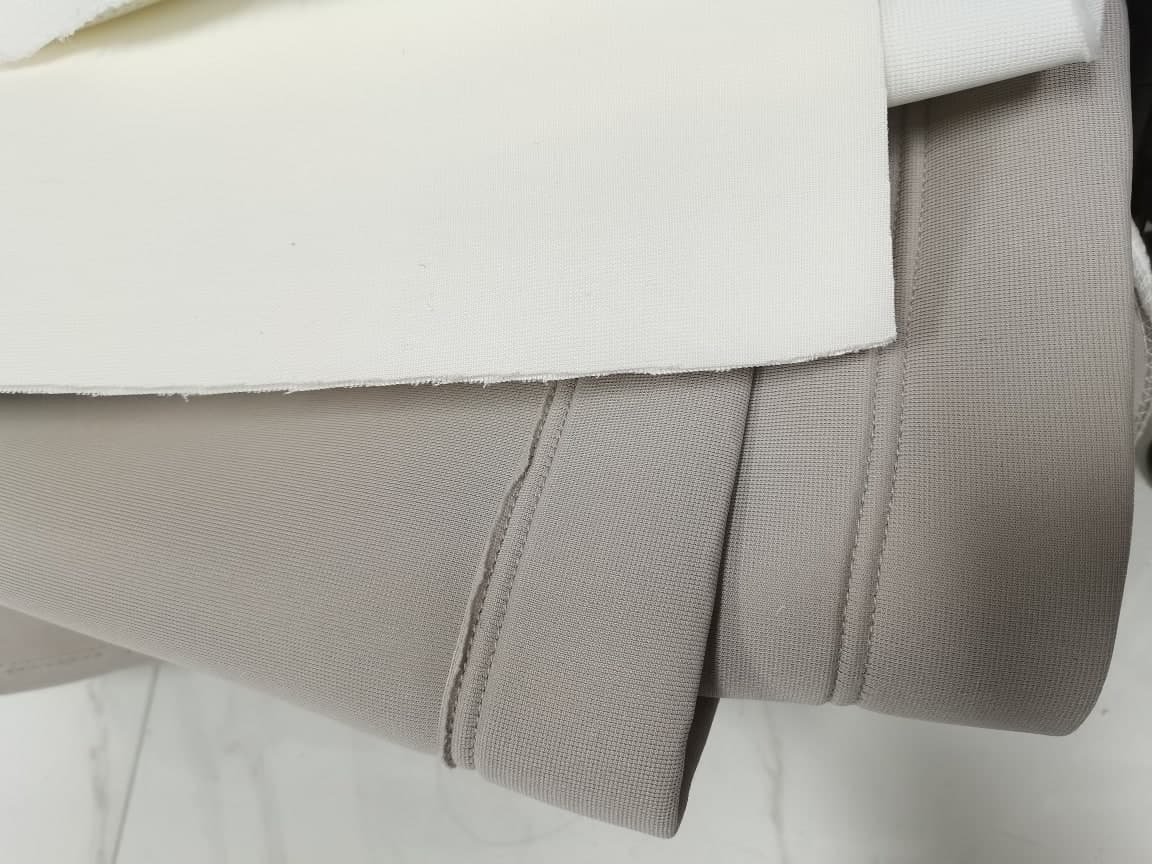
Construction, both materials
- 500gsm, 3mm thick
- Tested to 200,000 golf shots
- Edges folded back and twin-stitched
- Maximum 3.2m in one dimension. The other can run as long as you need.
What you get
The screen, finished to your spec — cut, hemmed, with the eyelets, pockets or hoops you chose built in.
Fixings aren’t included. Bungees, hooks, battens and velcro receiving strips come from your frame supplier or a hardware shop. It keeps the price to the thing that’s actually made to measure.
Why 3.2m
That’s the roll width. A screen wider and taller than 3.2m would need a seam across it, and a seam on an impact surface is a weak line where a ball hits it. We won’t build one without talking to you first.